

Firing of chief Olly Robbins cut short a radical program to reform the once-prized Foreign, Commonwealth and Development Office.
LONDON — King Charles appears to have pulled off his high-stakes U.S. visit — but back on a street in Whitehall bearing his name, things look far less rosy.
Officials at the Foreign, Commonwealth and Development Office (FCDO), housed in a grand 19th century building on King Charles Street, are facing a torrid time, hit by scandal, key vacancies at the top, and a biting program of cuts that’s forcing hard choices.
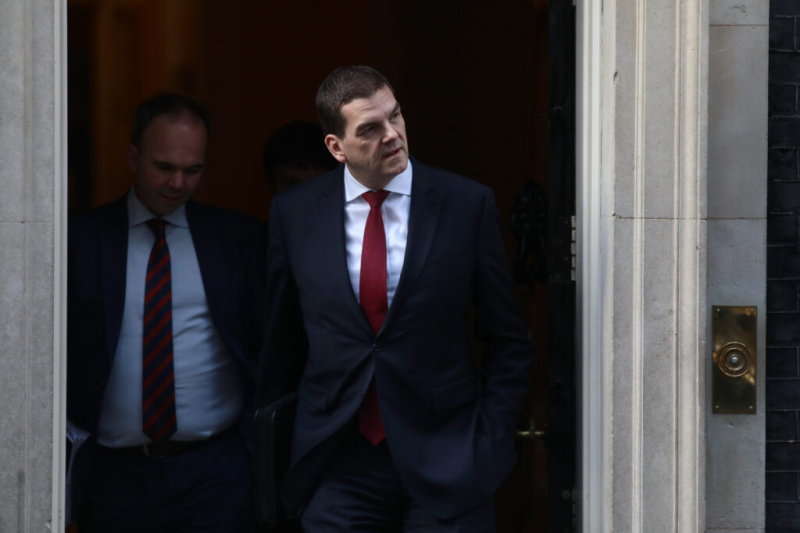
Olly Robbins, a veteran of Brexit negotiations hand-picked by the Keir Starmer to steward the FCDO, was sacked by Prime Minister Starmer a fortnight ago for his role in alleged security vetting lapses during Peter Mandelson’s ill-fated appointment as U.S. ambassador.
That cut short Robbins’ mission to deliver a radical program of departmental reform by 2030 — and now insiders complain this has left the department, once a prized part of the British government machine, rudderless and fearful for what comes next. This additional pressure comes at an unusually busy time in foreign affairs, when Starmer is keen to project confidence on the world stage.
Dave Penman, general secretary of the FDA trade union representing civil servants, said the ministry had “lost a really visible leader” and now there was “turmoil, because someone’s now got to try and pick up that mantle not in a planned transfer of power, but in a crisis they didn’t need.”
‘State of shock’
Robbins was in charge of the “FCDO 2030” project, which aimed to reduce the department’s overall headcount between 15 and 25 percent — removing around 2,000 jobs — by the end of the decade.
Under the efficiency drive, staff were forced to reapply for their own roles in a “job-matching” exercise, which is due to conclude in mid-May, letting people know whether they would continue in post, be moved elsewhere, or made redundant. The overall transformation program is expected to go ahead as planned under Robbins’ interim replacement, Nick Dyer.
One FCDO official, granted anonymity to speak candidly like others in this piece, said staff had been left “in a state of shock” in the immediate aftermath of Robbins’ removal, noting there was already “agitation bordering on grievance” about departmental reforms, with the change of leadership only leading to “more uncertainty and challenge.”
A second official said that the mood was “in the toilet” and the department faced “losing all the wrong people, and at the same time, I just don’t understand what the priorities are.”
The same official pointed to a specific example of the department not operating as usual. Mandelson’s replacement in Washington, Christian Turner, has not been reprimanded after it emerged earlier this week that the ambassador told a group of students in February that the only country that shares a special relationship with the U.S. is “probably Israel.”
That’s a major faux pas for a British diplomat. The official said in “normal times,” Turner’s unguarded remarks would have drawn harsher action, but the FCDO “can’t afford” another scandal after Mandelson.
The FCDO’s overhaul comes at the same time as unprecedented strains on traditional repositories of British soft power, such as international aid, the British Council, and the BBC World Service.
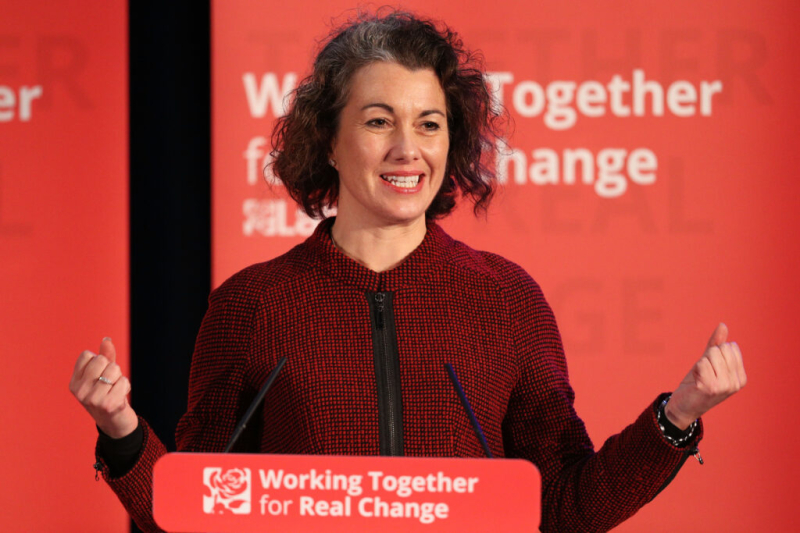
Sarah Champion, a Labour MP and chair of the House of Commons International Development Committee, told POLITICO she was “hugely concerned” about the morale of FCDO staff, adding: “You have to question how the events of recent months are affecting our global standing and soft power.”
An FCDO spokesperson said: “The FCDO is transforming to be more agile and focused, so we can deliver for the U.K. in a rapidly changing world,” adding that reforms in train would “ensure value for money for the taxpayer, while retaining our world-leading expertise in diplomacy and development.”
Four people with knowledge of the workings of the department said there was a particular problem with senior officials on overseas postings being advised that there would be no role for them to return to in the U.K.
One of these people, an opposition MP following the reorganization closely, said that reducing the number of “in-country” positions would be made worse by cuts elsewhere, which could ultimately mean the loss of defense attachés and trade representatives in some regions.
Another said many deputy heads of mission were leaving altogether for the private sector, rather than face the indignity of a demotion.
Quest for leadership
Some observers argued, however, that the way the department works is old-fashioned and that a rethink, which would make it more strategic and geopolitical, is overdue.
Sophia Gaston, research fellow at King’s College London, said this time of upheaval needed to be seen in the wider global context, noting that the FCDO “has assumed a degree of resilience a nuclear bomb could not dislodge — it is the final resting place of the ‘keep calm and carry on’ mindset.”
Nonetheless, she added, Britain’s allies “will want to see a sense of grip and order restored as quickly as possible.”
In the immediate term, Starmer will need to decide on a permanent new boss for the FCDO, with Deputy National Security Adviser Barbara Woodward widely seen as a strong contender. Incoming ambassador to the EU Caroline Wilson, High Commissioner to India Lindy Cameron, and Defence and Security Director General at the FCDO Jonathan Allen are all in the frame too.
Some would like to see Karen Pierce, the former ambassador to the U.S. who was removed from D.C. in favor of Mandelson, return triumphant. But this is seen as less likely because of her history with Starmer and, in the words of one government official, “she’s more of a diplomat than a bureaucrat.”
In the meantime, Foreign Secretary Yvette Cooper faces an uphill struggle in shepherding her department. It’s a common view in Westminster that her influence in government has been eroded by Starmer’s National Security Adviser, Jonathan Powell, leaving her with the less enviable assignments.
But others said she was well-placed to provide leadership, with one former Labour aide saying “she really goes to bat for her corner.” A Labour MP with a foreign policy background described her as “on the case.”
However, the same Labour MP said Starmer himself ought to be “going in there and helping to reset and boost morale.”
What’s not yet clear is whether the turbulence on King Charles Street could, in turn, knock some of Starmer’s strategic aims off course – with the U.S. relationship on the rocks, Ukraine peace talks stalled, and a reset of relations with the EU yet to bear real fruit.
Olivia O’Sullivan, director of the U.K. in the World program at think tank Chatham House, said it was “not a good time for the FCDO to have these internal questions about its structure, because it makes it more challenging to address urgent international issues.”
Hanging over all of this is the question of Starmer’s own survival, which he has tied closely to his own qualities as a statesman amid mounting domestic strife.
The second FCDO official poured scorn on the idea of Starmer “portraying himself as a PM who has to stay in post because of foreign policy” after the Mandelson scandal and firing of Robbins. “You can’t have your cake and eat it too,” they said.
Dan Bloom contributed to this report.