

Contents
Sixteen-year-olds have been promised the vote by the next election. POLITICO’s focus group asks young people what they actually want.
LONDON — They’re young, full of ideas — and about to be given the vote.
Britain’s government has committed to lowering the voting age from 18 to 16 years — a major extension of the electorate that could have big implications for the outcome of the next race, expected by 2029.
It means Brits who are just 12 today are in line to vote in the next general election, which is expected to be a fierce battle between incumbent Keir Starmer and his right-wing challenger Nigel Farage.
But what do these young people actually think?
In a bid to start pinning down the views of this cohort, POLITICO commissioned pollster More in Common to hold an in-depth focus group, grilling eight youngsters from across the country on everything from social media disinformation to what they would do inside No. 10 Downing Street. To protect those taking part in the study, all names used below are pseudonymous.
The group all showed an interest in politics, and had strong views on major topics such as immigration and climate change — but the majority were unaware they would get the chance to vote in 2029.
In a bid to prepare the country for the change, the Electoral Commission has recommended that the school curriculum be reformed to ensure compulsory teaching on democracy and government from an early age.
Get your act together
There are few better introductions to the weird world of British politics than prime minister’s questions, the weekly House of Commons clash between Prime Minister Keir Starmer and his Conservative opponent Kemi Badenoch.
Our group of 12-13-year-olds was shown a clip of the clash and asked to rate what they saw. They came away distinctly unimpressed.
Hanh, 13, from Surrey, said the pair seemed like children winding each other up. “It seems really disrespectful in how they’re talking to each other,” she commented. “It sounds like they’re actually kids bickering … They were just going at each other, which didn’t seem very professional in my opinion.”
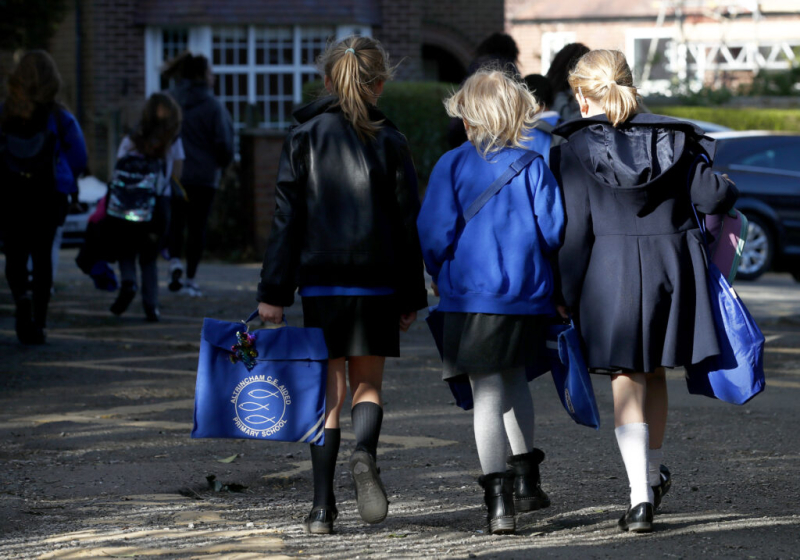
Sarah, 13, from Trowbridge in the west of England, said the leading politicians were “acting like a pack of wild animals.”
In the clip, the Commons backbenches roar as Tory Leader Kemi Badenoch quips about Starmer’s MPs wanting a new leader for Christmas. In turn, the PM dismisses the Conservative chief’s performance as a “Muppet’s Christmas Carol.”
Twelve-year-old Holly, from Lincolnshire, said the pair were being “really aggressive and really harsh on each other, which was definitely rude.”
And she said of the PM: “It weren’t really working out for Keir Starmer.”
None of the children knew who Badenoch was, but all knew Starmer — even if they didn’t have particularly high opinions of the prime minister, who is tanking in the polls and struggling to get his administration off the ground.
Twelve-year-old Alex said the “promises” Starmer had made were just “lies” to get him into No. 10.
Sophie, a 12-year-old from Worcester in the West Midlands, was equally withering, saying she thought the PM is doing a “bad job.”
“He keeps making all these promises, but he’s probably not even doing any of them,” she added. “He just wants to show off and try to be cool, but he’s not being cool because he’s breaking all the promises. He just wants all the money and the job to make him look really good.”
Sarah said: “I think that it’s quite hard to keep all of those promises, and he’s definitely bitten off more than he can chew with the fact that he’s only made those statements because he wants to be voted for and he wants to be in charge.”
While some of the young people referenced broken promises by Starmer, none offered specifics.
The Farage factor
Although they didn’t know Badenoch as leader of the opposition, the whole room nodded when asked if they knew who Nigel Farage was.

“He’s the leader of the Reform party,” said Alex, whose favorite subject is computing. “He promises lots of things and the opposite of what Starmer wants. Instead of helping immigrants, he wants to kick them out. He wants to lower taxes, wants to stop benefits.”
Alex added: “I like him.”
Sarah was much less taken. “I’ve heard that he’s the leader of the far right, or he’s part of the far right. I think he’s quite a racist man.”
Farage has faced accusations in recent weeks of making racist remarks in his school days. The Reform UK leader replied that he had “never directly racially abused anybody.”
Other participants said they’d only heard Farage’s name before.
When asked who they would back if they were voting tomorrow, most children shrugged and looked bewildered.
Only two of the group could name who they wanted to vote for — both Alex and Sam backed Farage.
Policy worries
Politicians have long tried to reach Britain’s youngsters through questionable TikTok videos and cringe memes — but there was much more going on in the minds of this group than simply staring at phones. Climate change, mental health and homelessness were dominant themes of the conversation.
Climate change is “dangerous because the polar bears will die,” warned Chris, 13, from Manchester. Sophie, who enjoys horse riding, is worried about habitats being destroyed and animals having to find new homes as a result of climate change, while Sarah is concerned about rising sea levels.
Thirteen-year-old Ravi from Liverpool said his main focus was homelessness. “I know [the government is] building houses, but maybe speed the process up and get homeless people off the streets as quick as they can because it’s not nice seeing them on the streets begging,” he said.
Sam agreed, saying if he personally made it into No.10, he would make sure “everyone has food, water, all basic survival stuff.”
Sarah’s main ask was for better mental health care amid a strained National Health Service. “The NHS is quite busy dealing with mental health, anxiety and things like that,” she said. “Maybe we should try and make an improvement with that so everyone gets a voice and everyone’s heard.”
Immigration divisions
When the conversation moved to the hot-button topic of immigration, views were more sharply divided.
Imagining what he’d do in government, Alex said he’d focus on “lowering taxes and stopping illegal immigrants from coming over.”
“Because we’re paying France billions just to stop them, but they’re not doing anything,” he said. “And also it’s spending all the tax money on them to give them home meals, stuff like that.”
In July, Starmer and France’s Emmanuel Macron unveiled a “one in, one out” pilot program to tackle illegal migration, although it’s enjoyed limited success so far and has generated some embarrassing headlines for the British government.
Hanh said she’d been taught at school that it’s important to show empathy, but noted some people are angry about taxes going to support asylum seekers. Chris and Sarah both said asylum seekers are fleeing war, and seemed uneasy at the thought of drawing a hard line.
Holly said she wants “racism” — which she believes is tied to conversations about immigration — to end.
“I often hear a lot of racism [at school] and prejudice-type stuff … I often hear the N word. People don’t understand how bad that word is and how it can affect people,” she said. “They [migrants] have moved away from something to get safer, and then they get more hate.”
Hanh said she is seeing more anti-immigration messages on social media, such as “why are you in my country, get out,” she said. “Then that’s being dragged into school by students who are seeing this … it’s coming into school environment, which is not good for learning.”
News snooze
Look away now, journalists: The group largely agreed that the news is boring.
Some listen in when their parents have the television or radio on, but all said they get most of their news from social media or the odd push alert.
Asked why they think the news is so dull, Hanh — who plays field hockey and enjoys art at school — said: “It just looks really boring to look at, there are no cool pictures or any funny things or fun colors. It just doesn’t look like something I’d be interested in.”
She said she prefers social media: “With TikTok, you can interact with stuff and look at comments and see other people’s views, [but with the news] you just see evidence and you see all these facts. Sometimes it can be about really disturbing stuff like murder and stuff like that. If it’s going to pop up with that, I don’t really want to watch that.”
These children aren’t alone in pointing to social media as their preferred source of news. A 2025 report by communications watchdog Ofcom found that 57 percent of 12-15-year-olds consume news on social media, with TikTok being the most commonly used platform, followed by YouTube and then Instagram.
Sophie isn’t convinced that the news is for her.
“Sometimes if my parents put it on the TV and it’s about something that’s really bad that’s happened, then I’ll definitely look at it,” she said. “But otherwise, I think it would probably be more for older people because they would like to watch basically whatever’s on the TV because they can’t really be bothered to change the channel.”