
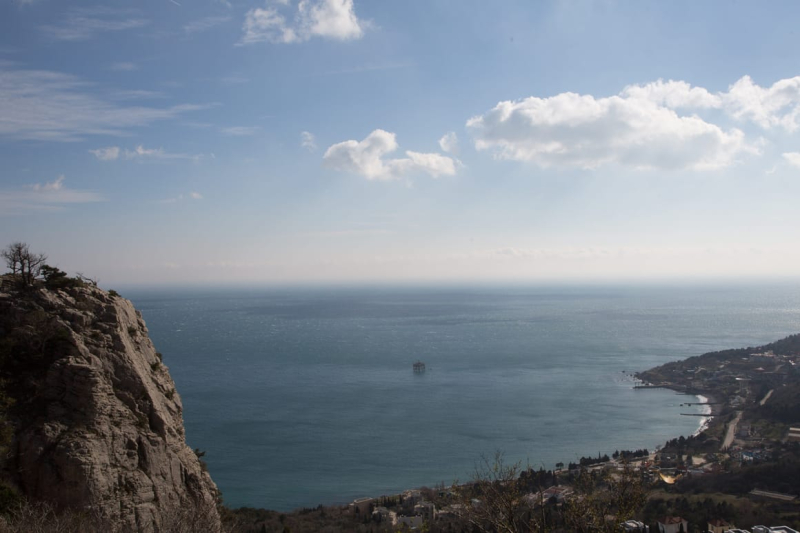

What was supposed to be Vladimir Putin’s crowning achievement has become a military and personal headache for the Russian leader.
Oleksandra warned her parents in Crimea to stock up on emergency supplies weeks ago. But her mother didn’t take the warning seriously.
Crimea was supposed to be Russian President Vladimir Putin’s crowning achievement — a stronghold in the war against Ukraine, a launchpad to project Russia’s military power across the Black Sea and a domestic symbol of his imperial ambitions. All of that is now under threat, with Ukraine gaining air control over routes into the Russian-occupied peninsula, targeting supply logistics, and looking to isolate and weaken Russia’s forces in the south.
“My mother was convinced neither Russia nor Ukraine would ever do anything to threaten Crimea,” recalled Oleksandra, who did not give her last name for fear of endangering her relatives. Even as missiles launched from Crimea were striking Kyiv, “She said: ‘But Crimea is special.’”
In the 12 years since Russia annexed the peninsula, Moscow created the impression that it was untouchable thanks to mass militarization and economic integration. But what was once a strategic asset for President Vladimir Putin is now turning into a critical vulnerability — both militarily and for the leader himself.
Today, Crimea’s population of 2.5 million — Oleksandra’s parents among them — are living with cuts to power and water, with no deliveries and with no fuel, as Ukrainian drones target power supplies alongside military facilities. Cell service vanishes amid frequent blackouts, public transit has practically disappeared, and fuel sales to private individuals and businesses are banned. Prices have shot up and the tourist season, upon which many depend, is dead in the water.
Authorities declared a state of emergency in late June.
For many, getting out of Crimea has also become near-impossible. Ukrainian drones have destroyed bridges and now patrol the land route through occupied southern Ukraine to Russia. Most trains no longer run. In early June, more than 3,000 vehicles were queuing to exit via the Kerch bridge, which Kyiv says was built without its consent, thus making it illegal.
“I was afraid [my mother] would blame Ukraine for this,” said Oleksandra, who has lived in Kyiv since 2014 due to pressure from Russia’s security services. Russia has prosecuted thousands in Crimea for perceived sympathy toward or connection to Ukraine.
Instead, as Ukraine’s campaign to isolate Crimea looks to tilt the balance in the country’s south, Oleksandra’s mother now believes — like many Ukrainians — that the peninsula is where the war will end.
“[My mother] has this hope,” said Oleksandra. “But I’m not sure she understands it can come with a cost.”
‘Crimea is the golden key‘
Crimea is, indeed, special. The Ukraine war began with its annexation in 2014 — turning the peninsula into an almost sacred symbol of Russia’s imperial might. And while the United Nations and Western countries imposed sanctions on Moscow for this blatant violation of international law, they have since largely accepted it as a fait accompli.
In the decade since, Russia turned the former holiday paradise into a military base that allowed its forces to rapidly occupy swathes of southern Ukraine in 2022’s full-scale invasion. Crimea became the battlefield’s safe rear, supplying Russia’s southern front and projecting its military force outward, all while the peninsula’s inhabitants remained relatively sheltered from the ongoing war.
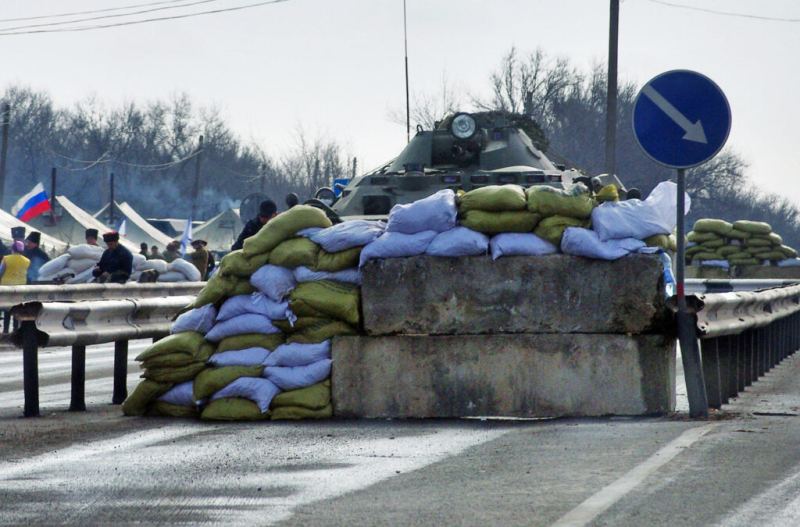
That changed dramatically this summer.
Thanks to Ukraine’s current advantage in mid-range strike drones, it is in a position to degrade and perhaps even destroy some of Russia’s military capabilities in the country’s south by disrupting the logistics that keep its army functioning. Ukraine hopes this will force Russia to redirect its forces from elsewhere on the front, easing pressure on the Ukrainian army, as well as Russia’s attacks on towns and cities.
“We want to destroy the Russian military presence in Crimea, and I think we will do it,” said Andriy Zagorodnyuk, chairman of the Centre for Defence Strategies think tank and former Ukrainian defense minister.
Breaking Russia’s military hold on Crimea has significance beyond Ukraine, disrupting Moscow’s military operations out of its Black Sea port — for example, the peninsula was the logistics hub supporting Russia’s Syria campaign from 2015 to 2024.
Crimea also has huge personal significance for Putin, whose domestic popularity soared when the peninsula, first colonized by the Russian empire 300 years ago, fell so easily back under Russian control. Losing it would strike a direct blow to his reputation, and could stoke dissatisfaction with his leadership and the war back home.
“Crimea is the golden key to Russia’s imperial ambitions,” said Illya Pavlenko, a former deputy head of Ukraine’s Main Intelligence Directorate.
Some of Ukraine’s partners — most notably U.S. President Donald Trump, who said last year that Ukraine “has no cards” — had previously indicated that ceding Crimea to Russia could be part of a deal to end the war. But Russia may be finding the peninsula administratively and militarily too difficult and expensive to keep — let alone uphold the peace and good living it promised Crimeans in 2014.
“Now we are making cards for ourselves,” said Pavlenko.
Ordinary people
While Kyiv’s interdiction campaign is directed at breaking Moscow’s military might and reputation, it has inevitably affected Crimea’s civilian population. In addition to the thousands of Russians that Moscow encouraged to move to the peninsula, many Ukrainian citizens still live there, including indigenous Crimean Tatars who have suffered disproportionate repression since.
According to Refat Chubarov, head of the Crimean Tatar Mejlis — a governing body outlawed by Russian authorities and now based in Kyiv — the peninsula’s indigenous population should be prepared to face even greater difficulty moving forward. He advised preparing emergency stocks of food and medicine, keeping away from Russian military installations and making sure to have a place to shelter from attacks.
“We don’t know how this will end,” he said.
But could it end with the peninsula’s restoration to Ukraine? The last time that seemed possible was during Ukraine’s much-hailed 2023 counteroffensive, and any hopes since have been tempered by the country’s failure to shift the front line at the time.
“[People in Crimea] have some optimism that this time it could end with liberation. But they also say, ‘don’t trick us like you did in 2023,’” said Chubarov.
Russia prepared militarily, economically, through education and propaganda to take Crimea for decades, observed Pavlenko. Ukraine must use a similarly broad array of tactics, he said. “We have always said that Crimea is Ukraine, and Ukraine will use all methods to get Crimea back. Crimea can’t be returned by military means alone … We are applying military pressure now to give our diplomats the chance to sit at the negotiating table and say: ‘We are not leaving Crimea out.’”
Zagorodnyuk believes Ukraine has perhaps a year to press the technological advantage that is now making it possible to pressure Russia. “Of course, [Russia] will copy us eventually,” he said. “We certainly can’t afford to waste time.”
Indeed, this could be a window of opportunity for Ukraine to take back some of the southern territory Russia has held since 2022. But while Ukraine hopes to make the peninsula even more difficult and expensive for Russia to hold than it already is, it will likely be just as difficult and expensive for Ukraine to hold.
“I do believe that the liberation of Crimea is possible,” said Zagorodnyuk. “But not in the immediate future.”