
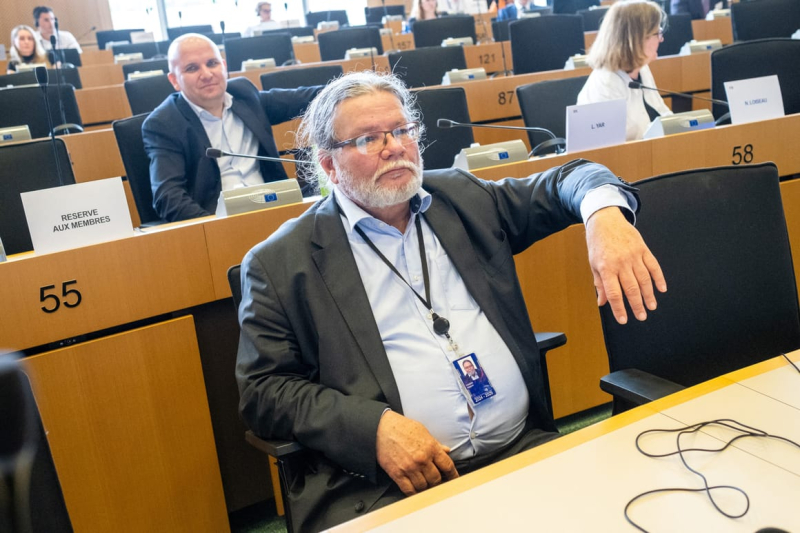

Alexandr Vondra failed to disclose his leadership role at a think tank backed by major defense firms.
BRUSSELS — Alexandr Vondra, a Czech member of the European Parliament, did not disclose his role as honorary chair of an influential think tank in the Czech Republic, despite negotiating files affecting the companies funding the organization.
Transparency International argues that Vondra’s failure to disclose his relationship with the Prague Center of Transatlantic Relations may violate the European Parliament’s code of conduct. The issue was first flagged to POLITICO by Aria, a climate investigations NGO.
Vondra said in an email that his honorary role does not need to be declared, as his position is “strictly symbolic and has never constituted any legal relationship. Therefore, there was no reason to declare this symbolic role in my declaration of private interests.”
The Parliament’s press service told POLITICO that the legislature’s code of conduct “does not distinguish between different types of membership in boards or committees.”
Vondra is a member of the European Conservatives and Reformists group and a former Czech defense and foreign minister. He has long-standing ties to PCTR, an “internal research, education and advisory facility” at Cevro University — a private university with links to the conservative Civic Democratic Party of which he is a member.
The Czech think tank also denied any wrongdoing.
Vondra’s role is an honorary position that is “purely symbolic,” said PCTR Director Kateřina Weissová in an email to POLITICO, adding that the think tank works as a specialized center at Cevro University and “does not maintain its own accounting.”
Both Vondra and PCTR maintain he never received compensation or reimbursement from the think tank.
A long-term affiliation
Vondra started as the think tank’s director in 2013 before transitioning to honorary chair after winning election to the European Parliament in 2019. He is prominently featured on the website and participates in events at the think tank through his role.
However, the affiliation is not listed in his private interest declarations.
Vondra has declared other affiliations, such as sitting on the board of directors of the Institute for Right-Wing Politics — a political institution founded by the Civic Democratic Party.
Under the Parliament’s code of conduct, MEPs must disclose “membership of any boards or committees of companies, non-governmental organisations, associations or other bodies established in law, or any other relevant outside activity that the Member undertakes” before the end of their first inaugural session.
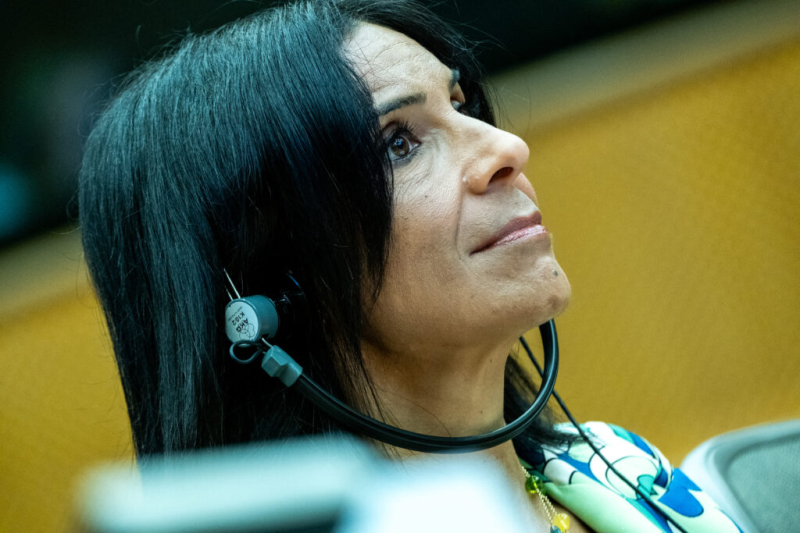
Other MEPs with similar “honorary” titles have disclosed their affiliations in their declarations, including Italian MEP Giusi Princi, who is the honorary president of the NGO ACES Europe, and Slovak MEP Miriam Lexmann, who is an honorary fellow at the Warwick Institute for Global Sustainable Development.
During his first mandate as an MEP, Vondra listed Cevro University on his declaration of private interests, stating that he had worked there as a lecturer during the three-year period before he took office. He declared a monthly remuneration of €2,000.
Transparency International plans to lodge a complaint on Friday with the Parliament’s MEP-led Advisory Committee, calling on the group to investigate Vondra’s lack of disclosures and the potential conflict of interest they raise.
“Various questions arise on the probable influence Mr Vondra’s affiliation and chairmanship of the PCTR have on his mandate as MEP,” states the complaint, which was seen by POLITICO.
Defense ties
Beyond Vondra’s role as honorary chair, Transparency International argues that his affiliation with the PCTR creates a potential conflict of interest. Among the center’s top partners and funders are the Czechoslovak Group (CSG) and Colt CZ Group, two major defense companies.
Vondra is the lead negotiator for the ECR on the defense omnibus — part of the European Commission’s effort to slash red tape and simplify the regulatory process. He also serves the same function on a file focused on military mobility, which is aimed at making it easier to move troops and supplies around the bloc.
“PCTR’s principal partners and donors include CSG and Colt CZ Group — companies with a direct interest in EU legislative files on which Mr. Vondra serves as shadow rapporteur,” reads the complaint.
In his role as shadow rapporteur, Vondra has put forward amendments that would grant defense projects priority access to EU funding, enhanced legal protections and exclusion from environmental transparency requirements.
CSG also has ties to the automotive sector through its ownership of Tatra Trucks, the largest truck manufacturer in the Czech Republic. Vondra similarly serves as shadow rapporteur on legislation reforming emissions targets for cars and vans, and has argued in favor of watering down the rules, echoing arguments made by parts of the automotive industry.
The Parliament’s code of conduct has transparency rules regarding MEPs’ affiliations, and how those affiliations could influence their policymaking when appointed as a negotiator on a file. An MEP who serves as rapporteur or shadow rapporteur must submit a new declaration of any conflict of interest.
In his declaration form for the current mandate, Vondra checked that he had no awareness of a conflict of interest. Because his position at PCTR is a “symbolic” one, Vondra told POLITICO he does not consider his role as creating such a conflict.
Vondra met with both CSG and Colt CZ Group after being appointed shadow rapporteur — two meetings he did declare in line with lobbying and transparency rules. But Transparency International said the meetings raise questions about which role Vondra played in the meetings.
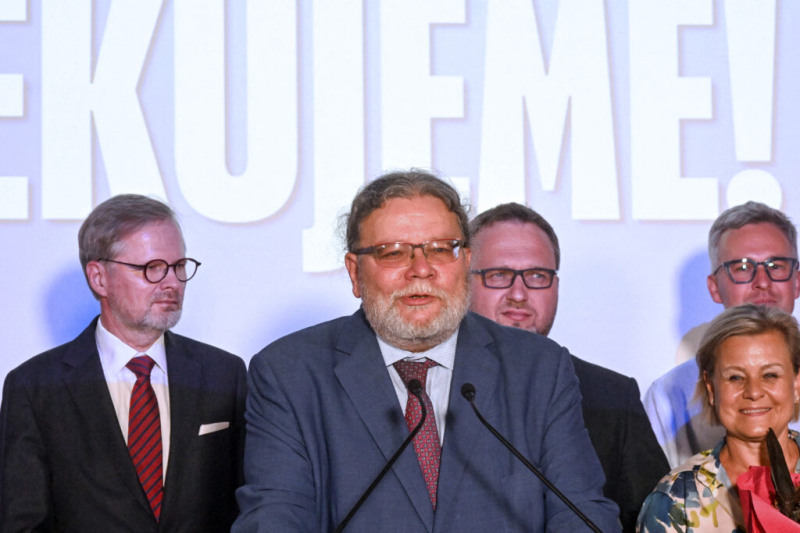
In its complaint, the NGO is also calling on the Parliament’s Advisory Committee to investigate whether Vondra’s connections with PCTR present a conflict of interest.
“Any activity by Mr Vondra raises questions as to whether he is acting in the interests of the public and his constituency, or in those of the PCTR and its partners,” reads the letter.
In good company
Transparency International currently has 10 additional complaints against other MEPs before the Advisory Committee.
The committee — made up of eight MEPs appointed by the Parliament president — can assess whether the code of conduct was broken but is not required to act.
According to its 2025 annual report, 11 cases of alleged code breaches were reported directly to the Advisory Committee that year. Eight of those cases were fully evaluated, with the committee concluding that either no breach had occurred or recommending the MEP in question update their relevant declarations.
Most of the committee’s conclusions rely on responses from the involved members themselves, according to the annual report.
“The problem is that the European Parliament system is highly permissive,” said Raphaël Kergueno, a senior policy officer at Transparency International. “You’re not faulted for having a conflict of interest; you’re faulted for not being transparent about it.”