

Contents
British lawmakers offer their tips for the incoming PM on building goodwill on the backbenches.
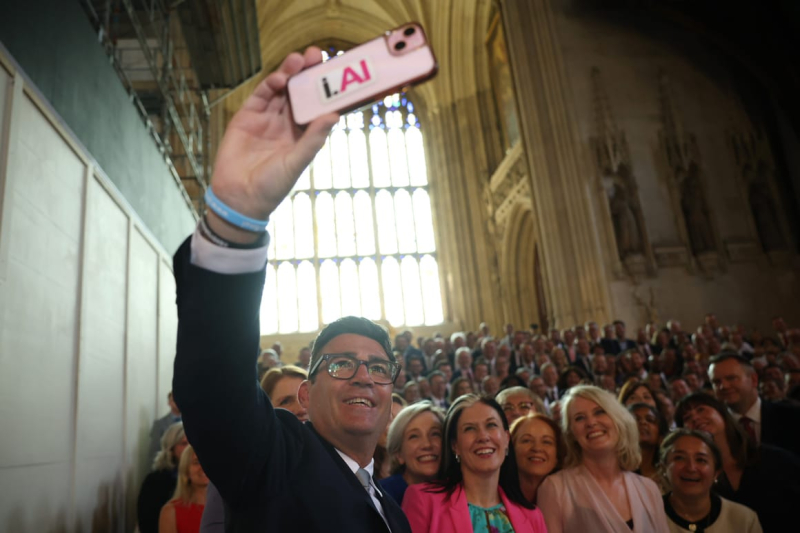
LONDON — Andy Burnham is the new darling of the ruling Labour Party. Keir Starmer used to be too.
The former Greater Manchester mayor and newly elected Makerfield MP secured 322 nominations from his colleagues as of Thursday evening as the contest to become the next Labour leader and prime minister formally got started.
He is expected to replace Starmer— who resigned last month after acknowledging he had lost the support of his party despite being less than two years out from a landslide win in 2024 — as Labour leader on July 17, and take over government the following week.
Even as a shoo-in, recent British political history suggests that Burnham has a tough task ahead keeping Labour’s 400-plus MPs happy until the next general election.
In an email to MPs this week, Burnham said he would create a team “where everyone is valued, seen, listened to and can make their mark” — a pledge he will have to stick to if he wants to keep colleagues on side.
POLITICO has five top tips for Burnham to keep the support of his restive party — from Labour MPs themselves.
1. Show up and listen
MPs have plenty to say — and they want it heard by the people in charge.
Backbenchers are not just raising their own personal causes, but feeding back what their constituents are telling them, they pointed out.
“Many of the forced errors over the last two years have been because ministers didn’t engage with backbenchers,” said Rachael Maskell, a left-wing MP who took aim at the “authoritarian, center-led” decision-making of the Starmer administration.
She lost the whip for four months last year over her opposition to the government’s welfare reforms — which were significantly watered down after a backbench rebellion.
Maskell already has a meeting with Burnham in the diary, and Noah Law, a 2024 intake Labour MP, says he is getting face time too.
“I’ve had more quality time with him than I have with any other senior figures or cabinet figures, let alone the prime minister,” Law said, advising Burnham must keep his “ear to the ground” going forward.
2. Accept disagreement
Burnham must not copy Starmer’s zero-tolerance approach to dissent and suspend MPs who vote against the government, MPs said.
Neil Duncan-Jordan, another welfare rebel who Starmer suspended, says the former Greater Manchester mayor must “ensure all voices are heard, and dissenting is not seen as disloyalty.”
He wants policies outside the 2024 manifesto “run past a backbench committee drawn from across the political spectrum” to avoid “making announcements in a vacuum and lacking support.”
MPs are rational and know they won’t get everything they want, said Steve Witherden, a 2024 intake MP. They are more prepared to fall in line if they feel their views have at least been considered, he added.
3. But maintain some discipline
Burnham has been scathing of the Westminster whipping system, claiming it treats them “like a school kid.” In his email to MPs this week, he said the Whips Office should “be our HR department, not something to be feared.”
But MPs warn they want the PM to maintain some order, given they don’t have time to consult every amendment to every bill.
“Like in so many things, it’s a balance,” Witherden argued.
MPs should “have a little bit of autonomy and a little bit of freedom to be a critical friend,” he added.
4. Don’t trash Keir
Starmer might be yesterday’s man — but he shouldn’t be dismissed.
One MP from the 2024 intake, granted anonymity to comment freely, said Burnham should “be respectful and actually acknowledge the good work we have done.”
Not recognizing many Labour members think the departing PM was treated in an “appalling” way could have severe consequences, this person added.
Burnham might have the wind in his sails now, but Starmer’s tenure is a lesson in how quickly things can turn.
5. And if all else fails …. call a snap election
Some MPs have been privately suggesting losing some colleagues would make the party easier to manage. Burnham will inherit a huge majority of 156 MPs over the opposition.
Mark Spencer, former Conservative prime minister Boris Johnson’s chief whip, says a majority of about 40 is ideal.
“It gives enough scope for the Whips Office to free up ministers to go on visits, but it focuses the parliamentary party on the fact that if they don’t turn up and vote they’ll lose,” he said.
A chief whip has “very little power” over a huge parliamentary party, Spencer added.
“There’s no carrot because there’s not enough ministerial jobs to go round, and there’s no stick because they think: ‘What’s the worst you can do when the electorate are going to kill me at the next election anyway?’”
But however tempting it might be, Spencer warned Burnham against the nuclear option of going to the polls: “He [Burnham] could put them right back onto the opposition benches. The only thing worse than too big a majority is not having a majority.”