
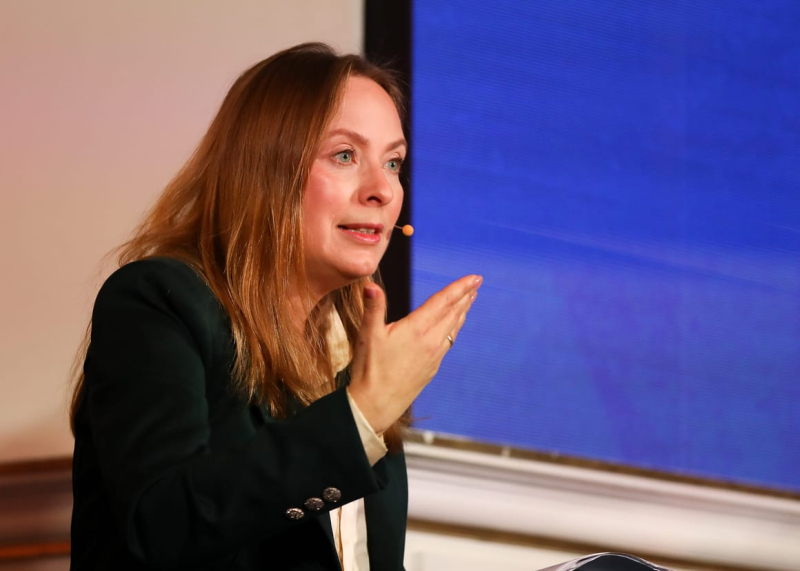

The centrist Polska 2050 has split up amid a bitter leadership fight ahead of a crucial 2027 parliamentary election.
WARSAW — A bitter January leadership tussle has split the ranks of Polska 2050, a centrist party within Poland’s ruling coalition led by Prime Minister Donald Tusk.
Some 15 MPs left the party Wednesday after last month’s contest to replace its former leader, TV celebrity-turned-politician Szymon Hołownia, turned ugly. The losing faction accused Hołownia’s successor and the party’s new leader, Katarzyna Pełczyńska-Nałęcz, of stifling criticism.
The rebel MPs under challenger Paulina Hennig-Kloska vowed to stick with the Tusk-led coalition, but their political fate — and that of the ruling coalition — is uncertain ahead of a pivotal election scheduled for next year.
Tusk’s government has struggled to pass laws and fulfill its pro-Brussels pledges in the face of obstruction from its opposition right-wing arch-rival, Law and Justice (PiS), and the veto power wielded by President Karol Nawrocki, a PiS ally.
Tusk’s Civic Coalition leads PiS comfortably in the polls but its coalition partners — Polska 2050 in particular — have been floundering. Polska 2050 has been polling a mere 2 percent to 3 percent support for months, below the minimum 5 percent election threshold required for representation in parliament.
Tusk downplayed what he called “turbulences” in Polska 2050 and said the party’s feuding factions remained “loyal to the government.”
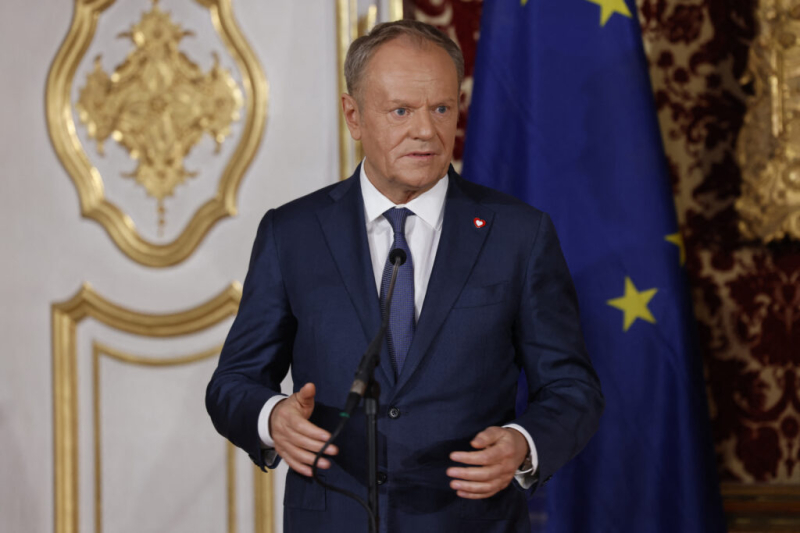
“We have had to endure and overcome turbulence far greater than this over the past year. We have weathered shocks on the global, European and Polish political stage and come through them in very good condition,” Tusk said.
The 15 rebel MPs under Hennig-Kloska, the climate and environment minister in the Tusk government, have formed a new parliamentary caucus named Centrum.
Hennig-Kloska said the new caucus “will regain the space to work and to deliver on the pledges from our 2023 campaign,” adding there was no room for “dialogue, genuine partnership or the pursuit of policy goals” in Polska 2050.
The remains of the former Polska 2050 caucus — also numbering 15 MPs — side with Pełczyńska-Nałęcz, the minister for EU funds and regional policy. Following her win on Jan. 31, the party leadership voted to freeze personnel changes to de-escalate tensions before a March convention. Their former colleagues called the move an attempt to silence them.
The turmoil also split Polska 2050’s representation in the Senate and in the European Parliament after MEP Michał Kobosko left the party Monday.
Polska 2050 has been in deep crisis since Hołownia’s disastrous 2025 presidential campaign, in which he won less than 5 percent support and placed behind even far-right maverick Grzegorz Braun. Hołownia’s failed presidential bid also ended Polska 2050’s alliance with the Polish People’s Party inside the Tusk coalition.
In the previous 2020 presidential election, by contrast, Hołownia had won nearly 14 percent and capitalized on that result to found Polska 2050.
The party, Hołownia said at the time, was a third option amid the ongoing feud between Civic Coalition and Law and Justice that has dominated Polish politics for over two decades.
Polska 2050 was at one point neck-and-neck in the polls with Civic Coalition, but fell back after Tusk re-entered Polish politics following a prominent hiatus as head of the European Council.
Hołownia slammed the MPs who left Polska 2050, saying “they hate” the party’s new leader.