

Contents
How Czech IoT firm ACRIOS Systems used European-made hardware to digitise Vilnius’ energy grid, deploying 10,000 devices in a city-scale digital rollout. 25 March 2026
Every day in Vilnius, the capital of Lithuania, consumption data is automatically collected from hundreds of thousands of residential utility meters. There are no technicians in the field, no paper forms, and no manual labour involved. For most residents, this system is invisible, yet it is fundamental to the city’s modern infrastructure. While many “smart city” projects remain stuck in the pilot phase, Vilnius has achieved full-scale digitisation by looking to Central European engineering.
The technology driving this city-wide transformation was designed, engineered, and manufactured by the Czech firm ACRIOS Systems. Their work in Lithuania serves as a case study for the application of “Made in Europe” hardware. This is especially relevant in an era where supply chain resilience and data security are becoming central considerations for municipal authorities.
Bridging the gap between vision and reality
Smart city technology is often discussed as a horizon: a strategic vision, a pilot programme, or a future state. In Vilnius, however, the conversation is different because remote meter reading at the city scale is a daily operational reality for more than 500,000 residents.
ACRIOS Systems secured this contract through an open and competitive tender process. They were selected alongside a field of international technological suppliers, including established global players. This successful implementation may reflect a shifting landscape in the European tech market. It suggests that municipalities and utilities might increasingly consider agile, specialised firms that can deliver field-proven, customisable solutions. Such a shift could potentially enable greater flexibility and faster digitization of critical urban infrastructure.
Scaling 10,000 devices in five months
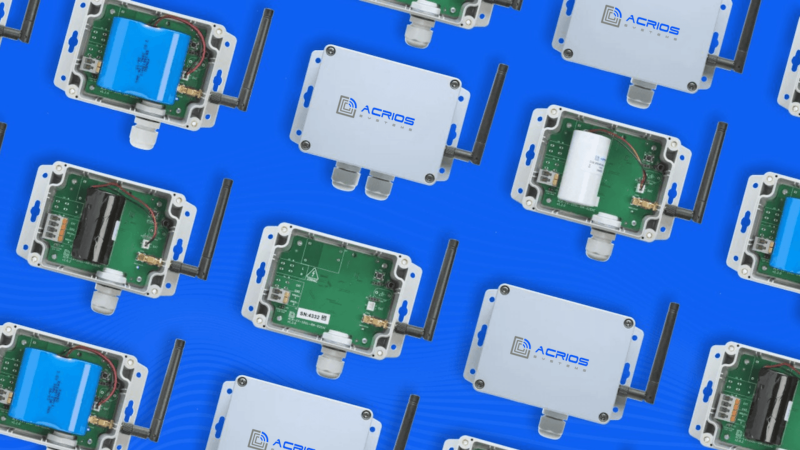
The Vilnius project involved an extensive deployment, requiring significant technical and organisational coordination. A total of 10,000 IoT data concentrators were installed across the capital. This creates a network that stands as a major implementation of its kind in Central and Eastern Europe.
The implementation tempo required the entire infrastructure to be deployed within a five-month window. Each of these 10,000 units is designed to service up to 800 individual meters. To manage this scale, ACRIOS shipped every unit pre-configured. Installation materials were included, customer SIM cards loaded, and specific settings already applied.
This foresight saved tens of thousands of minutes of manual configuration that would have otherwise been required in the field. By treating the hardware as a ready-to-use solution rather than just a component, the firm simplified a complex urban rollout into a streamlined industrial process.
Interoperability: breaking the legacy patchwork
Most European cities carry decades of accumulated utility infrastructure. This includes meters from different manufacturers, different generations, and different communication protocols. This heterogeneity is often a significant obstacle to digitisation and is rarely solved by replacing hardware.
ACRIOS Systems built its products to handle this complexity by connecting devices from multiple manufacturers into a unified data layer. Existing infrastructure is integrated rather than discarded. This approach avoids the high costs associated with “rip-and-replace” programmes.
In Vilnius, this had a concrete commercial impact. It removed the city’s dependence on a single provider and enabled competition among meter vendors. This resulted in measurable operational cost savings for the city.
In-house development as a long-term advantage
A key structural element of the ACRIOS approach is that the company develops both hardware and firmware internally. This matters beyond the initial installation because remote firmware updates can be pushed to every device in the field. This allows the network to adapt to new technical requirements or evolving security standards without physical intervention.
For a deployment of 10,000 units, this can lead to a lower total cost of ownership. The infrastructure can evolve in place. This helps ensure cities are not locked into a static technology stack that requires replacement as standards shift, a scenario that has affected earlier smart city deployments across Europe.
A model for European collaboration
The project was delivered in partnership with Taiklu, a local partner responsible for platform integration and market knowledge in Lithuania. This combination of a specialised technology provider and a locally embedded partner is a model for delivering complex infrastructure projects in the European Union.
“Our strength is the ability to connect different technologies into one functional whole,” says Radim Malinowski, CEO of ACRIOS Systems. “We are not just a hardware supplier. We deliver technology that must work in real city and utility environments.”
“Our goal is to deliver a system that works reliably and provides useful information,” adds Lukáš Smetana, Chief Sales Officer at ACRIOS Systems. “Every project starts with a conversation where we understand the operator’s needs. Only then do we discuss the specific technology. After years of preparation, it is rewarding to see the project meeting these expectations.”
Building the future of European infrastructure
As European institutions focus more on the provenance of critical infrastructure, hardware designed and built in Europe is increasingly scrutinised. The Vilnius deployment aligns with broader regulatory shifts, such as the Energy Efficiency Directive. This is increasing the need for accurate and accessible consumption data across the continent.
Vilnius argues that Central European firms can serve as architects of the systems that define European smart cities. Infrastructure that works is often infrastructure that remains in the background. In the streets of Vilnius, this Czech-engineered technology has been in full operation for two years, establishing itself as a proven functional standard for the city’s energy grid.
About ACRIOS Systems
ACRIOS Systems is a Czech technology company specialising in hardware and software development for smart metering, IoT, and energy management. With an in-house engineering team, the company designs and builds its own hardware and firmware. It delivers interoperable solutions for cities, utilities, and industry across Europe.
For more information, visit ACRIOS Systems.