

Here who’s fuming at the result — and who’s breathing a sigh of relief.
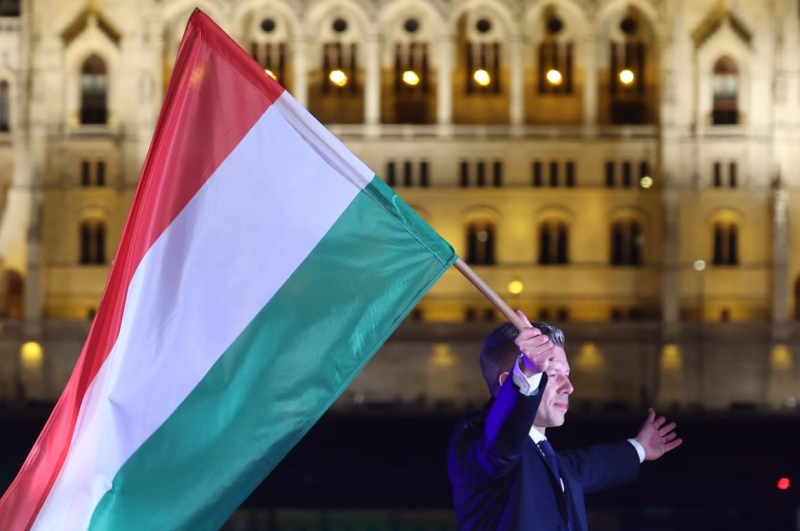
BUDAPEST — Viktor Orbán’s 16-year reign in Budapest has come to an end after he conceded defeat in the Hungarian election to challenger Péter Magyar.
With almost all votes counted Sunday night, Magyar looked set to win 138 seats in the 199-seat parliament, a supermajority that will grant him wide powers to reform Hungary.
“Hungarians said yes to Europe today, they said yes to a free Hungary,” Magyar told a cheering crowd on the banks of the Danube, while urging Orbán’s loyalists in state institutions to resign.
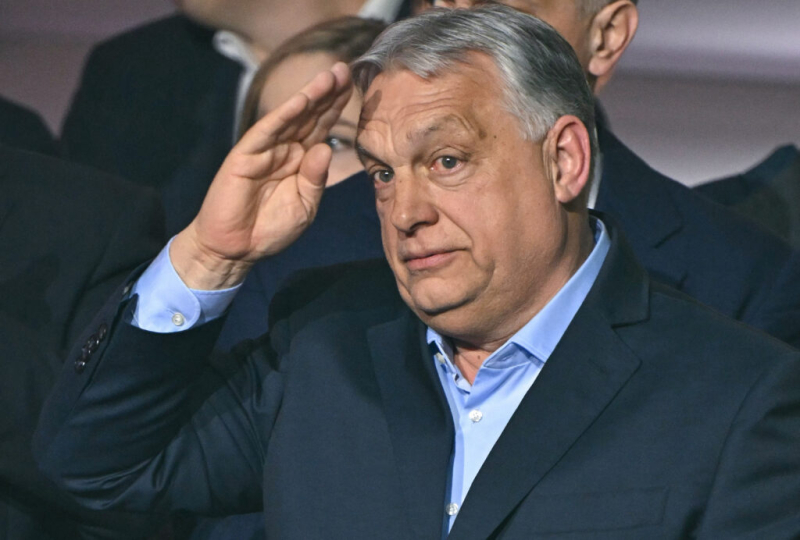
Orbán accepted the results during a speech, saying his Fidesz party would “serve our country and the Hungarian nation from the opposition.” Fidesz is on track to win 55 seats.
The ramifications of Sunday’s vote stretch far beyond Hungary’s borders. Here are all the other winners and losers from Europe’s most consequential election this year.
The winners
EU chiefs Ursula von der Leyen and António Costa
European Commission President Ursula von der Leyen and European Council President António Costa can wave goodbye to one of the EU’s most obstinate leaders, who wielded his veto on critical Brussels decisions, including financial support for Ukraine.
Orbán was also one of Brussels’ most vocal antagonists, fueling Euroskepticism while undermining the rule of law at home and repeatedly resisting EU legislation, which posed a direct challenge to the Commission’s ability to enforce its rules.
“Hungary has chosen Europe. Europe has always chosen Hungary. A country reclaims its European path. The Union grows stronger,” von der Leyen said moments after Orbán conceded defeat.
Ukrainians (with a caveat)
This year, Orbán vetoed a €90 billion loan to Ukraine agreed by leaders — including himself — in December 2025.
Hungary back-tracked on its approval after Russian oil imports stopped flowing via the Druzhba pipeline that traverses Ukraine, which Orbán said was a deliberate ploy by Kyiv to try to influence the election by weakening the Hungarian economy.
Ukraine needs the funding to continue fending off Russia’s full-scale invasion before the summer when its treasury is set to run out of cash.
President Volodymyr Zelenksyy congratulated Magyar on Sunday night. “Ukraine has always sought good-neighbourly relations with everyone in Europe and we are ready to advance our cooperation with Hungary,” he said, adding Kyiv is prepared for “meetings and joint constructive work for the benefit of both nations.”
Magyar wants to have good relations with Brussels and will likely unblock the loan. But it is a bittersweet victory for Zelenskyy, as the incoming prime minister has said he opposes sending Hungarian weapons or cash to Kyiv and he opposes fast-tracking Ukraine’s EU accession.
Magyar vowed to put that issue to a referendum, which would effectively mean stalling the process given the large anti-Ukrainian sentiment in Hungarian society, which he needs to cater to in order to maintain support.
Young Hungarians
Polls ahead of the vote suggested that up to two-thirds of Hungarians under the age of 30 wanted Orbán to go.
Massive protest-concerts in Budapest in the run-up to the election attracted hundreds of thousands of young Hungarians, many of whom said they would leave the country if Orbán won again, in testimonies to international media.
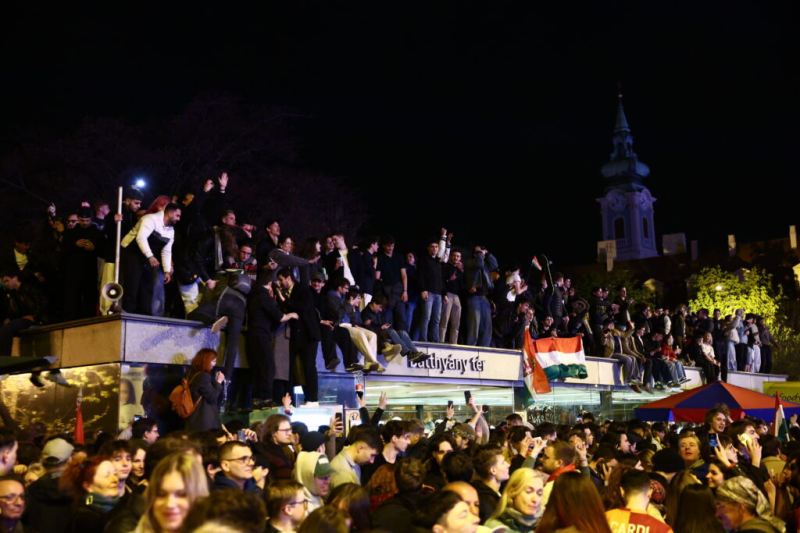
Magyar thanked the Hungarian youth in his victory speech, as crowds of young people flooded the streets of Budapest celebrating the result. “Thank you for bringing back hope, hope in change,” he said.
Journalists and doctors
Independent journalists have faced an uphill battle in Hungary as Orbán took control of 80 percent of media in the country. Despite that, independent reporters became a decisive factor in the final outcome. They uncovered how the Orbán government worked to undermine the opposition via the country’s secret services, and obtained details of phone calls between Budapest and the Kremlin, discussing sensitive EU matters.
Doctors will also be a winner, as Magyar has promised to increase public investment by €1 billion a year. That pledge comes after a decade of underspending in the health sector that left long waiting lists, dilapidated hospitals, lack of equipment and, ultimately, caused a brain drain, President of the Hungarian Medical Chamber Péter Almos told POLITICO.
Orbán’s government has in the past unleashed billboard campaigns blaming doctors for the system’s deficiencies.
The losers
Donald Trump and JD Vance
U.S. Vice President JD Vance visited Orbán in Budapest on April 7 to support his reelection bid, boasting that he would win and accusing the EU of interfering in the vote. U.S. President Donald Trump gave Orbán five public endorsements in the last six months and vowed Washington would provide Hungary with economic support.
“We have to get Orbán reelected as prime minister of Hungary, don’t we?” Vance told Fidesz supporters to rapturous applause during a rally at a football stadium. But the words of support were in vain, dealing a blow to the White House, which has now lost its key ally in Europe as transatlantic relations sour.
Fidesz-linked businessmen and think tanks
The network of conservative think tanks that Orbán’s government funds is poised to lose operating cash. That includes the Mathias Corvinus Collegium, the think tank that Orbán’s political director heads and which lobbies EU institutions in Brussels.
Hungarian businessmen close to Fidesz that dominate the country’s private sector — including Orbán’s childhood friend Lőrinc Mészáros and his son-in-law István Tiborcz — stand to lose their privileged access to EU funds and public contracts.
In his victory speech, Magyar said he will set up an “office for the restoration of national wealth” in which lawyers and police will investigate to recover state assets and put those who participated in corruption behind bars. “We will never again be a country of no consequences,” he said.
The Kremlin
Russian President Vladimir Putin has just lost a valuable ally — and a key source of inside information — at the heart of the EU.
In recent months, Hungarian and international media have revealed close ties between Budapest and Moscow, including phone calls between Foreign Minister Péter Szijjártó and his Russian counterpart Sergey Lavrov.
According to those reports, the two discussed internal EU deliberations on sanctions against Russia, with Szijjártó allegedly promising to share confidential European documents via the Hungarian embassy.
Europe’s right wing
Orbán, who frequently pledged to “occupy” Brussels and change the institutions from within, is the key figurehead of the far-right Patriots for Europe party, which brings together the EU’s nationalist parties such as France’s National Rally, led by Marine Le Pen, and Spain’s Vox, led by Santiago Abascal.
Orbán’s defeat is also a loss for other hard-right figures in Europe, including Italian Prime Minister Giorgia Meloni, who loses an ally around the negotiating table in Brussels.