

Contents
The jostling and maneuvering for influential roles has already begun — even though the reshuffle is still a year off.
STRASBOURG — A battle for the European Parliament’s most senior posts is underway.
More than a year out from a planned midterm reshuffle that will see the Parliament’s leadership posts reallocated in early 2027, the plotting and jostling has already begun.
Groups of lawmakers are adding top jobs talks to their agendas in anticipation of plum positions — from the president to committee leadership to key roles in the political groups — coming up for grabs.
This time, the Parliament’s two biggest factions are on a collision course over who gets the coveted president post. Meanwhile, the far-right firewall sees its latest challenge in the contest for powerful roles, and a new Russia-friendly grouping is in the works.
Here are five flashpoints to watch:
The battle for Parliament president
It’s no secret that current Parliament President Roberta Metsola would like a third term (which would make her the longest-serving president of the assembly) — neither Metsola nor European People’s Party chief Manfred Weber denies it.
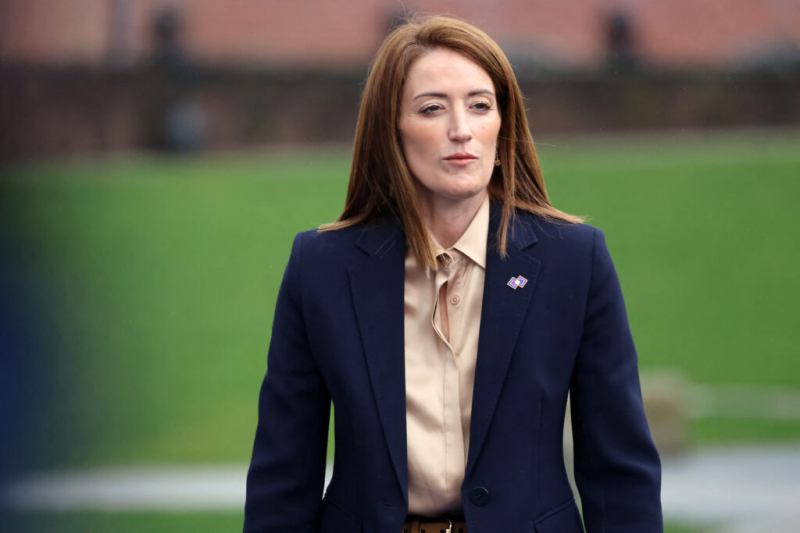
Parliament presidents are elected for two-and-a-half-year stints, which are renewable. Each Parliament term is five years.
Metsola signaled that a third term remained a possibility last June after she ruled out going back to Malta to become her national party’s leader. When asked by POLITICO whether she intended to run again at a press conference in October, she replied: “We are still 15 months away from the midterms and I’m here to deliver every day for the job that I was elected to do.”
Several lawmakers and officials said Metsola is working toward securing another term. “She’s in full campaign mode, giving favors to MEPs and officials,” said a liberal Renew MEP, granted anonymity to speak freely, as were others quoted in this piece.
The push would put Metsola and the EPP on a collision course with the Socialists and Democrats, the Parliament’s second-biggest group, which claims it should get the presidency as part of a power-sharing arrangement signed at the beginning of the term. But the EPP has remained vague about whether they committed to any such deal.
The S&D hasn’t yet pushed a candidate to replace Metsola — a fact that hasn’t escaped some of the party’s own allies. One Green lawmaker, when asked whether they would support the Socialists, said “I will think about it when they have a candidate, I cannot support a vague claim for a post.”
All the infighting between the EPP and S&D has opened the door for Renew Europe, the third member of the centrist coalition, to start thinking about suggesting a compromise candidate, two Renew lawmakers said.
Will far right secure leadership positions?
The reshuffle will again test the so-called cordon sanitaire, an informal arrangement among centrist forces to keep the far right out of decision-making.
In practice, that rule no longer applies when it comes to passing laws — the EPP has in the past year voted with the far right on topics such as migration and deregulation.
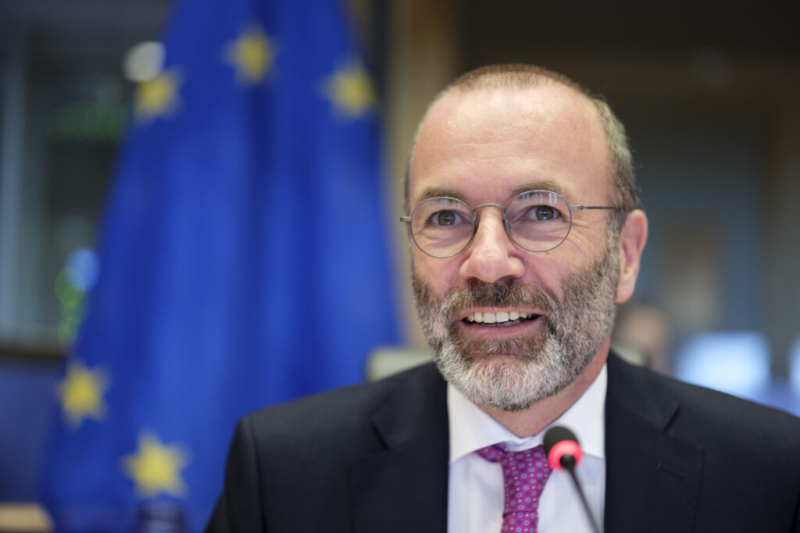
However, Weber said in an interview with POLITICO last year that it was a “red line” for him and his political family “to give any role for right-extreme politicians here in this house, to represent the institution, to be power holders on the administrative side, and also on other aspects where you have an executive role.”
Liberal and center-left groups say they don’t trust Weber because of the cooperation between the EPP and the far right, and suspect he could use the Parliament’s vice-presidencies and committee leaderships as bargaining chips to secure support for another term for Metsola.
The EPP’s ranks are also beginning to wonder whether it’s possible to keep far-right groups from power in Brussels while they govern in national capitals.
“What are we supposed to do when [Jordan] Bardella is president of France?” asked an EPP MEP, noting a country as big as France can’t be sidelined from top positions in Brussels.
After big gains in the 2024 EU election, the far-right Patriots and Europe of Sovereign Nations groups weren’t given any Parliament vice-presidencies or committee chairmanships and vice-chairmanships.
Although those decisions were taken through democratic votes, the Patriots — the third-largest group in the Parliament — have challenged them before the Court of Justice of the EU. They argue that it is discriminatory and breaks the Parliament’s own internal rules, which say that leadership positions should reflect the composition of the chamber.
If the court decides in their favor (no date has been given for that ruling), the Patriots could make big gains.
Plots to dethrone political group leaders
When positions are uncertain and lawmakers sense an opportunity, talk of coups tends to surface — and left-wing and liberal groups appear most vulnerable.
For the Greens, the current co-chairs — Terry Reintke and Bas Eickhout — both hail from the pragmatist wing of the group, willing to compromise to secure incremental wins. But the more idealistic faction is increasingly frustrated with what they see as a too-soft approach to opposition in the Parliament, and is pushing for a stronger voice — setting the stage for a potential internal clash.
Similarly, Renew Europe is divided between a left-leaning, greener faction and a more economically liberal right-leaning wing. Both factions think the other is planning to challenge the incumbent, Valérie Hayer, whose position is weakened by French President Emmanuel Macron’s fading support in polls, according to four liberal officials.
The Slovak, Dutch and Belgian delegations have been floated as potential alternatives, but no name has yet emerged as a viable contender.
In The Left group, an early-term agreement held that a Greek lawmaker would succeed Germany’s Martin Schirdewan as co-chair. But the Greek delegation has lost half its four members over the past year, opening the door for others to stake a claim, two group officials said.
The rest of the group leaders seem more secure.
Weber has a solid grip on the EPP after 12 years at its helm — even if critics point out that his long rule is precisely why the leadership needs refreshing.
The right-wing European Conservatives and Reformists and the far-right Patriots for Europe groups are also likely to keep the same leadership.
For the S&D, everything hinges on whether they can secure the Parliament presidency — a prize that would be fought over by the bloc’s national heavyweights: the Spaniards, the Italians and the Germans.
If the S&D doesn’t get the presidency, those national camps could instead fight over who chairs the group, currently Spain’s Iratxe García. But as long as Spanish Prime Minister Pedro Sánchez’s fragile left-wing government doesn’t fall, García is likely to be safe as she will have the backing of one big EU country.
Lawmakers on the move
Lukas Sieper, from the German Party of Progress, announced last week that he’ll be joining the Renew Europe group — pending confirmation by members of his party. He’ll move from the ranks of non-attached MEPs.
The move kicked off what is shaping up to be a year of backroom bargaining and political horse-trading, as groups court lawmakers they believe can be peeled away from rivals with the right mix of promises.
“Obviously, each of the groups in this Parliament has an interest in growing to gain influence,” Renew chair Hayer said at a press conference last week when asked by POLITICO. “Of course we have an interest in gaining members.”
Elisabetta Gualmini, an Italian MEP from Italy’s center-left Democratic Party, on Monday announced she was jumping ship from the S&D and joining the liberals of Renew.
Renew is currently the Parliament’s fifth-largest group and is eyeing fourth place, currently held by the ECR. Renew is now just two seats away from matching the ECR’s MEPs total.
All groups want more MEPs, as it brings more funding, more speaking time and determines the order of priority for speakers in meetings and debates.
“Groups are reaching out to every single MEP that could flip; the MEP shopping is all over the place,” said a Greens parliamentary assistant.
A new political group that’s close to Russia
Cypriot YouTuber-turned-politician Fidias Panayiotou, along with the MEPs of Slovakia’s leftist-populist Smer party, are planning to start a new group, as first reported by POLITICO in June and confirmed by Fidias to Cypriot media last week.
The lawmakers, along with those from Germany’s Sahra Wagenknecht Alliance, visited Moscow for Russian leader Vladimir Putin’s Victory Day celebrations last year.
While they currently lack the 23 MEPs from seven different countries that are required to form a group, the midterm reshuffle could make it possible.
The group’s unifying theme will be “peace and social justice,” and they are “pretty close” to reaching the needed number of lawmakers, an official with knowledge of the talks told POLITICO. “The idea is not to launch it with the minimum [number of MEPs], they want it to be stable.”