

Lithuania’s foreign minister says the EU loan deal only postponed the fight over whether to tap frozen Russian assets to fund Ukraine and pressure Moscow.
PRAGUE — Lithuanian Foreign Minister Kęstutis Budrys said Europe should put frozen Russian assets back on the table as it looks for ways to sustain Ukraine financially and increase pressure on Moscow to negotiate a peace deal.
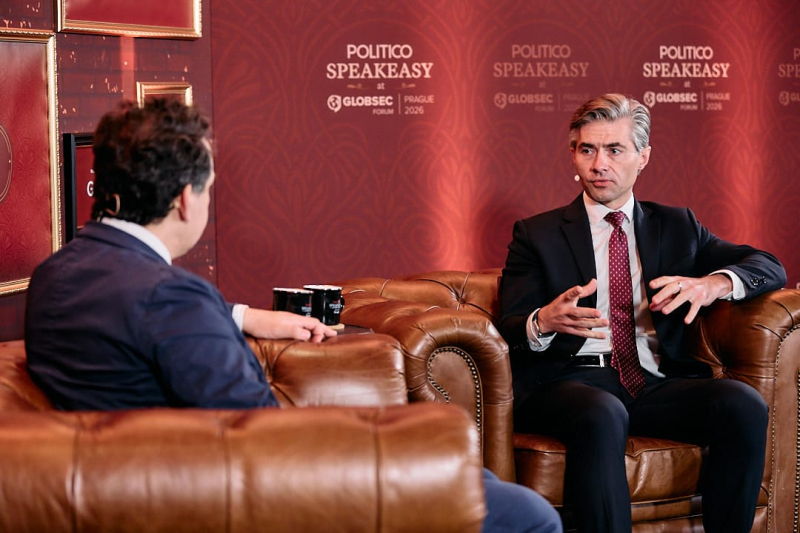
Speaking at the POLITICO Speakeasy at Prague’s GLOBSEC on Saturday, Budrys said last year’s agreement on a €90 billion loan for Ukraine was a useful step, but not a final answer to Kyiv’s long-term needs.
“It’s not the end,” Budrys said of the frozen assets debate, arguing that Russian state assets immobilized in Europe remain “the real resource of support to Ukraine” and “the real leverage to force Russia to negotiate.”
The EU ultimately opted for a €90 billion interest-free loan for Ukraine for 2026 and 2027, financed through EU borrowing rather than the direct use of frozen Russian sovereign assets, after the asset plan ran into legal concerns from Belgium and political resistance from Hungary amongst other countries.
Hungary later lifted its veto on the loan after Viktor Orbán was voted out of office, clearing the way for approval, but the compromise left the frozen-assets question unresolved: EU leaders reserved the right to use the assets for repayment if Russia does not pay reparations.
Budrys said the issue had effectively been postponed by the loan deal, but should now return to the political agenda. Asked whether he wanted frozen assets back on the table, he replied: “Yes.”
“I’m looking forward to discussing it,” he said. “It’s not closed.”
Budrys argued that Ukraine will continue to need major financing even after the current support package runs its course. “Who believes that there will be no need for money for the upcoming years after these two years?” he said, adding that Kyiv still faces funding gaps for security and defense needs this year.