

Contents
The startup's wireless system challenges the limits of classical induction charging by creating a stable field where multiple devices can move, rotate, and charge simultaneously.
Finnish-headquartered deeptech company Willo has raised a €2.9 million Pre-Seed round to accelerate the development of its wireless power system.
While most wireless power systems depend on alignment or directionality, Willo has designed a system that keeps devices charging over the air even as they move and rotate.
From hackathon meeting to deeptech founders
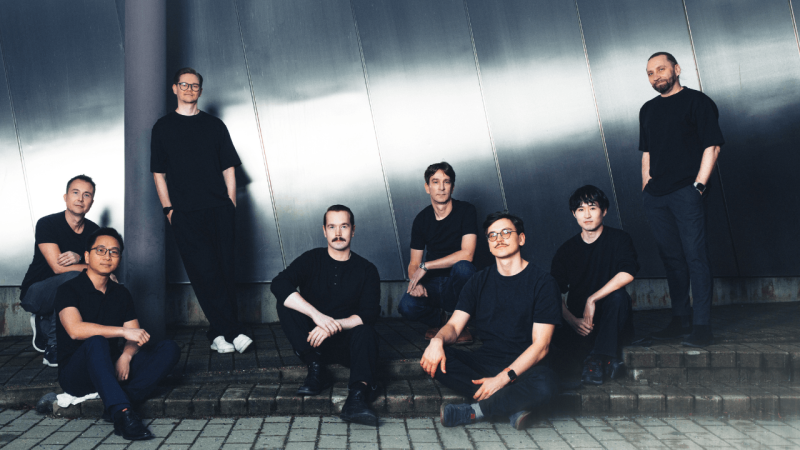
Willo was co-founded by Harri Santamala (CEO), Dr Nam Ha-Van (CTO), and Marko Voutilainen, who met at a hackathon as Voutilainen was leaving Slush. “At the time, it wasn’t clear that I’d end up building a company with them,” he recalls.
“But it was immediately clear these were people I wanted to work with.”
Voutilainen is effusive about his team, sharing:
“My CTO co-founder is one of the smartest people I’ve ever met. Not saying that because you’re recording — I genuinely believe he’s our generation’s Einstein.
What I respect most is someone who is incredibly smart in a deep, vertical way and also kind. There’s no arrogance. No ‘I’m better than you.’”
That early trust shaped the company’s direction.
The company’s core technology builds on more than a decade of wireless power research led by Ha-Van. After earning his PhD in South Korea, he returned as a postdoctoral researcher focused on wireless power transfer.
Creating a world without cables
Willo’s ambition is to create a world without cables — across consumer devices, industrial systems, manufacturing, drones, and virtually any electrically powered hardware.
According to Harri Santamala, co-founder and CEO of Willo:
“Wireless power is one of the last unsolved infrastructure layers in autonomy. Until power can be delivered without cables or manual charging, robots and devices will remain operationally constrained.
Willo is working to remove that barrier, and this funding round lets us turn a breakthrough demonstration into a real engineering phase,”
Proving the science to industry acclaim
The technology was first presented publicly at CES 2026, where the company’s system won CNET Group’s Best of CES 2026 Awards. It’s a long-tail mission, admits Voutilainen.“It will take time. But the world clearly needs it.”
So far, the demonstrations have been positive. Voutilainen admits that while the system isn’t optimised for distance yet, the team has proven the fundamentals: movement, rotation, and multiple devices charging at once.
“We’re getting inbound from some of the biggest companies in the world. Many don’t even have use cases yet — they just want to understand the tech.“When executives see it, their jaws drop.
The reaction is always: ‘How did you do this?’”
Further, while others are researching the tech, no one has successfully transitioned it out of the lab. According to Voutilainen, Willo protects its technology through a combination of patents and tightly guarded trade secrets.
“Patents are public — people can reverse engineer them to some degree. Trade secrets are like the Coca-Cola recipe. Only a handful of people know them, and they’re not written down digitally.”
Each engineering breakthrough is added to what the company calls an “onion strategy”: a core layer of foundational patents surrounded by successive protective layers.
“Every time we solve a new challenge, we patent it. Over time, you build layers around the core technology. It’s similar to how smartphones evolved — even swipe gestures became patent surfaces.”
Turning constant charging into constant operation
While the company has yet to announce commercial partnerships, Voutilainen admits that selecting an initial use case was challenging.
“At first, yes. Everyone wanted something. When big companies start emailing your employees directly, it gets noisy.”
The commercial model will vary by industry.
“This technology is extremely horizontal,” Voutilainen explains.
“Some markets will involve licensing, some hardware, some OEM integration. We won’t build our own phones — OEMs will embed receivers.
Industrial verticals may be contract-based. We want to enable other companies, not hoard the tech.”
He says the early flood of interest forced the founders to become disciplined about focus.
“Founders have to separate signals from noise. Some companies just want to peek under the hood.
Others have real problems we can solve — and you figure that out quickly once you start talking. Long-term success means discipline. You can’t chase shiny objects.”
Turning downtime into continuous operation
Not every company approaching Willo yet knows exactly how it would deploy the technology. “Some do. Some don’t,” says Voutilainen.
“We believe every electrical device will eventually go wireless, but we can’t tackle all verticals at once. We’re focusing first on autonomous robotics.”
Today’s robots are constrained by charging downtime. They must dock and pause work to recharge. Willo’s system is designed to eliminate that interruption.
It could also shrink battery requirements. Many devices carry oversized batteries to survive off-grid conditions; wireless power effectively brings them back onto the grid.
“That has sustainability implications — fewer minerals, smaller batteries.”
Now, the team’s focus is on building the technical foundation and early reference system that partners can begin evaluating and integrating around.
“VCs move quickly when they believe in something”
The round was led by byFounders, with participation from Interface Capital, Unruly Capital, and Wave Ventures, alongside a group of angel investors including:
- Andreas Klinger (Co-initiator of EU Inc & former CTO of Product Hunt),
- Niccolò Perra (Co-founder of Pleo),
- Vincent Ho-Tin-Hoe (CPO at Wolt & scout for NEA),
- Urho Konttori (Co-founder & CEO of Varjo), and
- Sune Alstrup (Founder of The Eye Tribe, acquired by Meta).
Fundraising, Voutilainen says, moved faster than expected.
“It was surprisingly fast. Once investors saw the demo, momentum accelerated. Term sheets came within weeks.”
He believes the speed reflects growing investor appetite to back European category leaders.
“VCs move quickly when they believe in something. There’s a strong appetite to build European champions. We want to help define a new global category from Europe.”
“Willo is creating a new way to transfer power over the last meter, which removes one of the major constraints for all modern infrastructure,” said Magnus Hambleton, Partner at byFounders.
“They are pairing deep technical work with universally applicable hardware execution that very few teams in Europe can pull off.”
Willo is headquartered in Finland and operates across Europe, the United States, and Japan.